Framework
5 min read
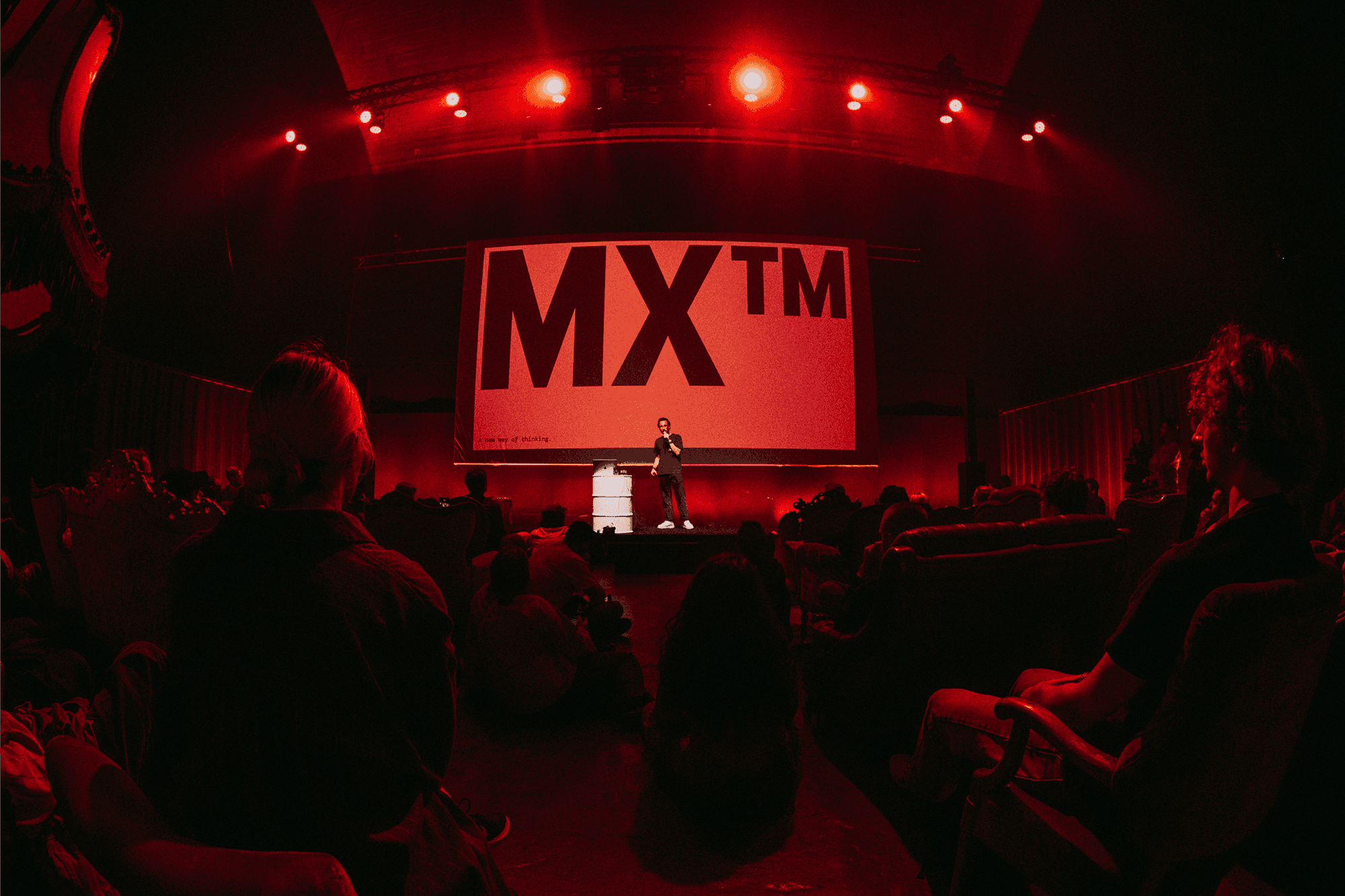
Vincent co-founded November Five and created MX™, the memory-first design method the team applies across client work. He speaks on brand experience and customer memory at conferences including MWC Barcelona.
Satisfaction scores measure what someone thought during the experience. Nothing measures what survives it. What survives it is what brings them back.
Kahneman’s peak-end rule: people store the emotional high point and the ending, not the average. An interaction can function perfectly and leave nothing behind.
Three shifts made this urgent. Switching costs almost nothing, choice is effectively infinite, and AI assistants basically assemble brand experiences from what people remember, repeat and recommend.
MX™ is how we work the memory question into product decisions: find where memory forms and where it leaks, redesign the moments that carry weight, then measure recall instead of intent.
At BASE we created and augmented experience into moments worth remembering. Bill-related support calls dropped 70%. In interviews, customers named these experiences as the moments they felt BASE understood them.
The moment that gets optimised away
There is a version of the same meeting inside every experience programme. A journey map goes up on the screen, the friction points are marked in red, and the mandate is to remove the red. Faster. Smoother. Fewer taps.
That work is real, and we do plenty of it. But run it for a decade across an entire category and something strange happens. Checkout flows converge. Onboarding converges. Navigation patterns get borrowed until every competitor feels like a slightly different colour of the same product. Efficiency stops being a differentiator once everybody has it.
Daniel Kahneman spent decades on how people judge experiences after the fact. His peak-end rule holds that we store two things: the emotional high point, and the ending. Not the average, and not the sum of the taps we saved. In the study most often cited, patients who went through a longer and objectively more uncomfortable version of a procedure remembered it as the better one, because it ended better. What they were rating was not the procedure. It was their memory of it.
An interaction can work exactly as designed and leave nothing behind.
Why this stopped being a nice-to-have
For most of the last twenty years, memorability was a bonus, a cherry on the pie. Three things changed that.
Switching got easy. In banking, telecom, retail and hospitality, moving to a competitor takes minutes and costs almost nothing, and brand loyalty among younger customers is the lowest on record. Nothing holds a customer in place except a reason to stay.
Choice went effectively infinite. Twenty options in a category all work well enough. Capability no longer separates them. How someone feels about you when they are not using the product does.
Discovery moved. People now ask an assistant to recommend a brand, a bank or a telecom operator. That shortlist gets assembled from what people remember, repeat and recommend. A product or experience nobody can describe never reaches it.
The three things we look for
Enter MX™, our proprietary method for actively designing for memories. It does not replace journey mapping or satisfaction measurement. It adds one question to every experience decision: will anyone remember this?
Three lenses answer it.
Distinctiveness. The brain stores what breaks a pattern. A moment that matches the category gets filed as generic and decays. So we look for where a brand, product or experience can afford to be structurally different rather than decoratively different.
Emotional charge. Memory and emotion run on shared pathways, and a neutral moment does not encode. “Pleasant” is too weak a signal to design against. We look for what a moment made someone feel. Intrinsic motivators like relief, pride, control and belonging encode far better than mild satisfaction or (often misplaced) delight.
Story-worthiness. The real test of a memory is retelling. If a customer describes your business or product through crafted memories, which moments do they describe? Usually there is no answer. No answer means no word of mouth, whatever the NPS says.
What it looked like at BASE
BASE is Belgium’s third-largest telecom operator, in a market where the default weapon is price. The most emotionally charged moment in that relationship is not onboarding or a campaign. It is the bill.
Read as a support problem, a bill is something to explain better so fewer people call. We read it as the moment the relationship gets decided. Customers were not confused about their bill. They were braced for it. So we stopped working on the explanation and gave people control of the bill before it arrived. Budget Control lets customers set their own limits and block the surprise themselves. Chill Your Bill applied the same guided approach to the invoice.
Bill-related support calls dropped 70%. CSAT on the new flow came in at 4.3, and My BASE became the highest rated telecom app in Belgium on both the App Store and Google Play.
The result we use most never made the case page. In customer interviews, people named Budget Control as the moment they felt BASE actually understood them. A memory with a brand attached to it, described unprompted, long after the interaction ended. A CSAT score tells you the flow was fine. That sentence tells you it was stored as a brand-memory.
How we run it
In practice, MX™ has three phases. A Memory Map audits where memory forms in an existing experience and where budget is going into moments customers will not retain. Memory Design reshapes the handful of moments that carry the most weight. Memory Proof puts recall, story rate and unprompted return alongside the business and satisfaction metrics already being reported, because a customer who comes back with no discount, no ad and no reminder is the clearest evidence there is that memory is doing the work.
It comes down to one question we now ask early in every engagement: what will your customer remember about this six months from now?
Most teams cannot answer it. That question is the whole distance between a transaction and a relationship.
Nobody remembers the product that merely worked.
